Article body
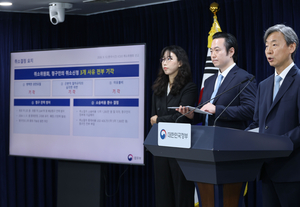
South Korea has defeated a Chinese investor Fengzhen Min's final bid to revive claims for at least 264.1 billion won ($197 million), after an international arbitration committee rejected his challenge to an earlier award dismissing the case. An annulment committee at the International Center for Settlement of Investment Disputes rejected Min's application Saturday morning, the government said Sunday. The decision leaves intact a May 2024 award that found his investment was unlawful and therefore outside the protection of the Korea-China investment treaty.
Min initially sought approximately 2 trillion won in damages. In his final submissions, he sought restitution of his shares in Pi Korea or monetary compensation of at least 264.1 billion won, along with other damages. The government stated that this was the first case in which a foreign investor directly claimed that Korean civil and criminal proceedings and their outcomes constituted violations of an investment treaty.
The case dates back to 2007 when Min set up Pi Korea in South Korea to borrow 380 billion won to buy the Huapu Building in Beijing. When Pi Korea failed to repay the money, the bank sought to recover the unpaid loans by selling shares in Pi Korea that had been pledged as collateral. Min challenged the disposal of the shares in the Korean court system but lost the civil case in a final Supreme Court ruling in 2017. Separately, he was convicted over promises and transfers of money and benefits to bank employees during the loan process.
Just over three years after losing the civil case, Min filed an investor-state dispute settlement claim in 2020, arguing that the bank's enforcement of the collateral and related Korean civil and criminal proceedings violated the Korea-China investment treaty. The tribunal dismissed all his claims in May 2024 after accepting the Korean government's argument that Min's establishment of Pi Korea and acquisition of its shares formed part of an illegal scheme to obtain financing through improper payments.
The committee rejected his application for annulment, leaving the original award intact. It also ordered him to pay about 1.51 billion won for the Korean government's legal costs, plus interest, and to bear the full $426,751 in costs of the annulment proceedings. This ruling follows a series of victories for the Korean government in major investor-state disputes.